Overview
Karanjin Technical is extracted from the seeds of Karanja (Pongamia pinnata) Tree. The active ingredient Karanjin is a Benzofuran flavonoid known for its pesticidal, insecticidal and acaricidal activities. It acts as an antifeedant and insect growth regulator. Like Azadirachtin, Karanjin also does not affect the useful microbes present in the environment. Studies have found Karanjin to have medicinal properties like antioxidant, antidiabetic, antibacterial, anti-inflammatory, gastroprotective, etc.
Key Specifications
| Purity | 40-56% w/w (Karanjin) |
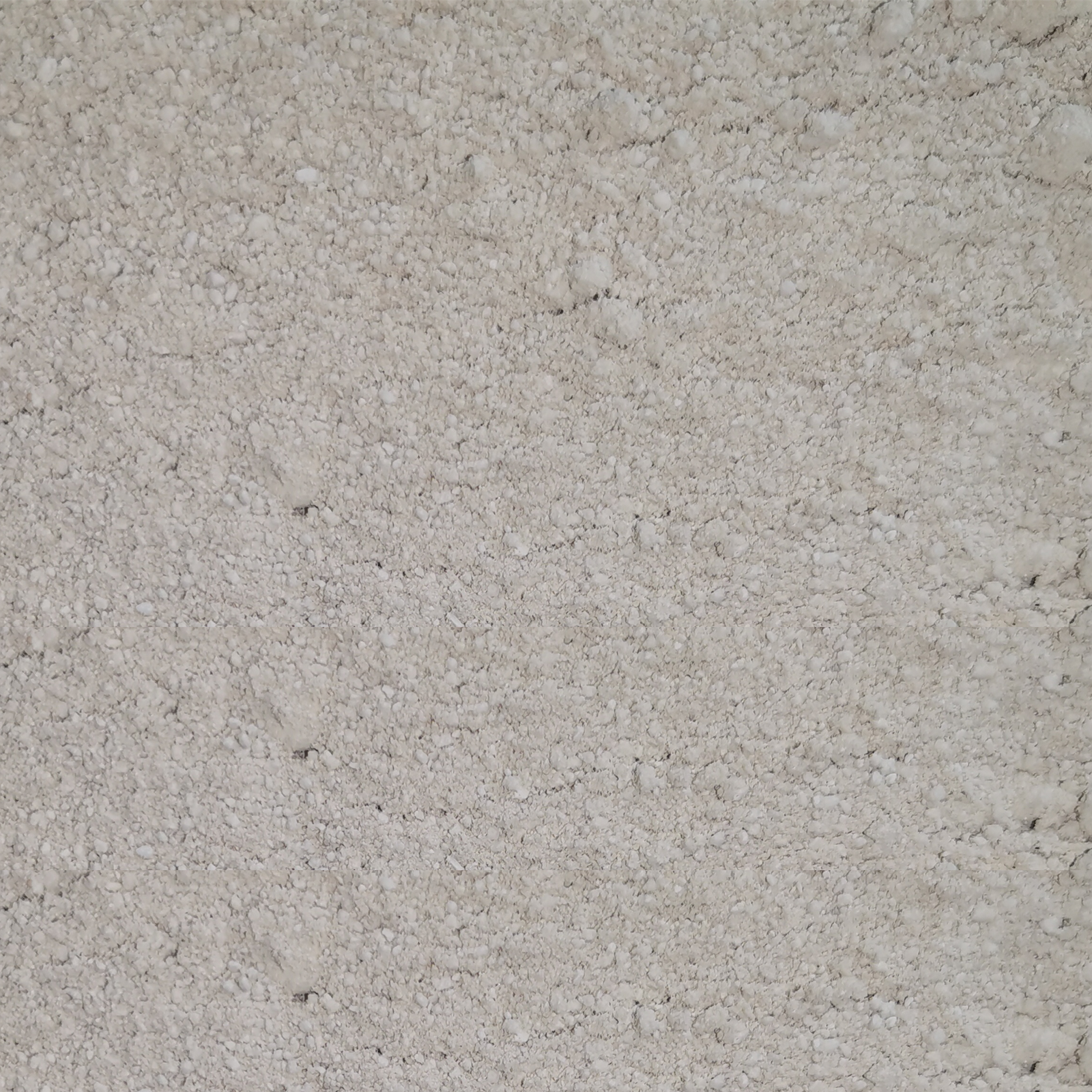
| Form | Powder |
| Colour | Pale yellow |
| Odour | Mild nutty |
| Moisture | < 1% |
Composition

Overview
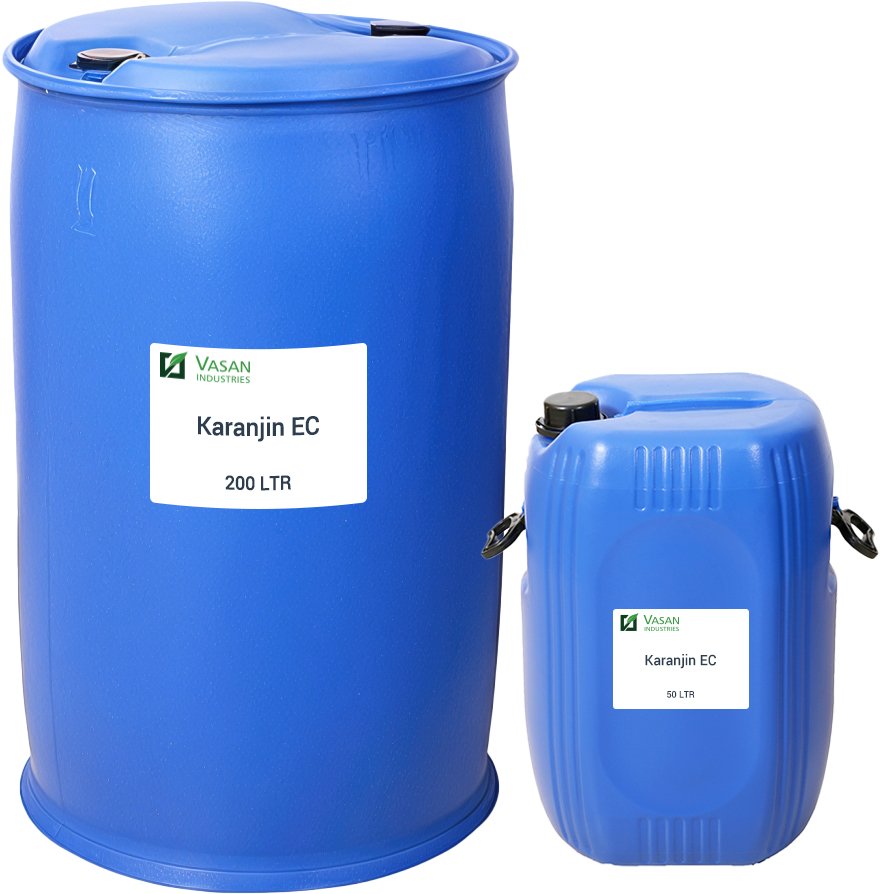
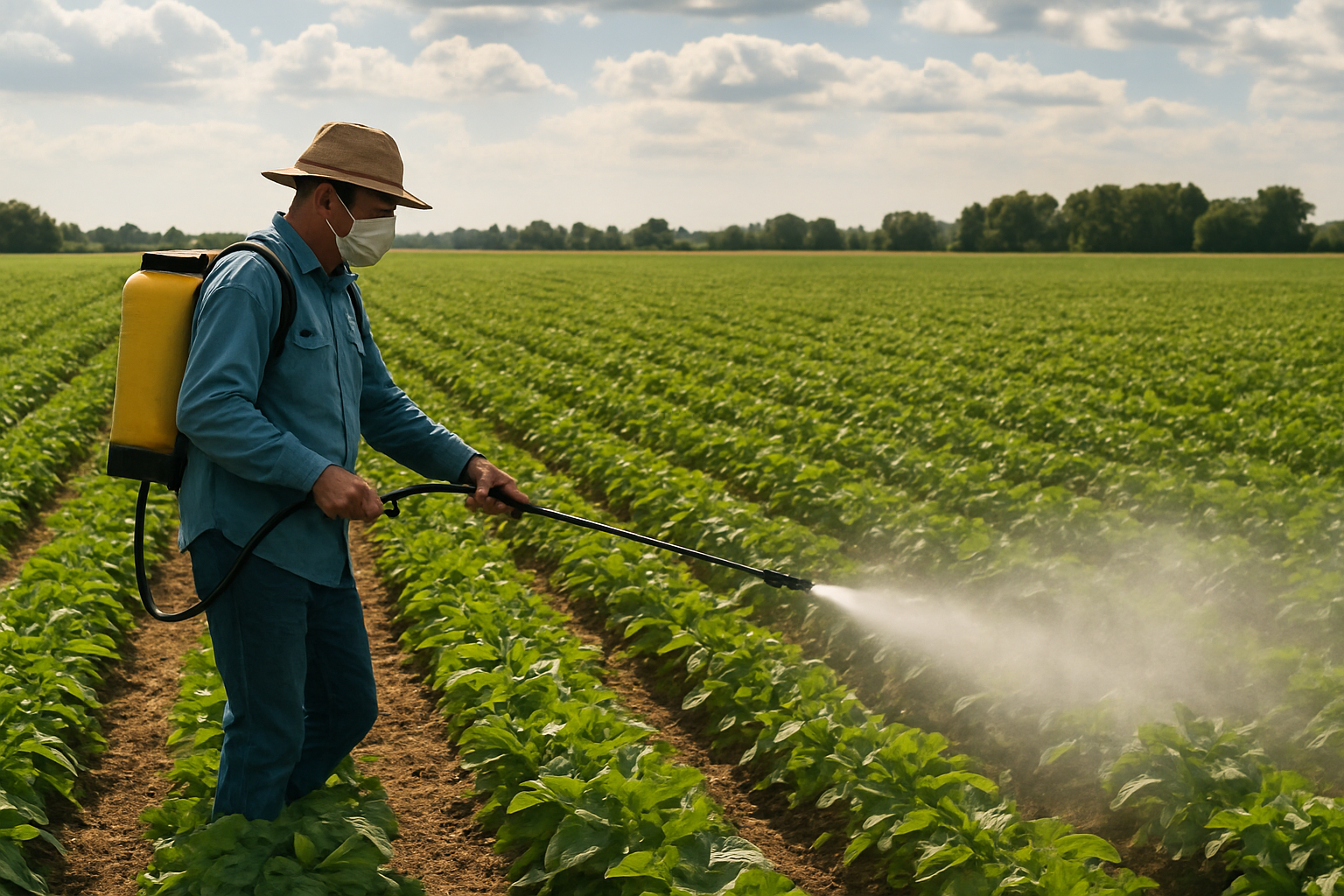
Karanjin ECs are the end-use pesticidal products formulated with different concentrations of the bioactive Karanjin. They can be used to control pests on Food Crops, Vegetables, Fruits, Ornamentals, Trees, Shrubs, Lawns, and Plants in the field and in and around Agricultural Areas, Commercial Nurseries, Greenhouses, lnteriorscapes and Home. Karanjin ECs also leave very little or no residue when used at recommended dose.
Key Specifications
| Active Ingredient | Karanjin |
| Concentration | Upto 2% (20,000 ppm) |
| Formulation Type | Emulsifiable Concentrate |
| Appearance | Clear viscous liquid |
| Solubility in water | Dispersible |
Mode of Action
Karanjin acts on the juvenile hormone of some larva and inhibits their growth. It is very effectively toxic against the termites. It halts the effect of ecdysteroids thus, acting as an insect growth regulator (IGR) and antifeedant. Karanjin also interrupted with cytochrome P-450 in certain insects and mites, disrupting bodily function.